

-
Guest Room Amenities
- Mini Shampoo & Conditioner
- Mini Body Wash
- Soap Bars
- Mini Lotion
- Shaving Kits
- Vanity Kits
- Comb Kits
- Sewing Kits
- Shower Caps
- Slippers
- Tissue Boxes
- Laundry Bags
- Coffee & Tea Kits
- Welcome Kits
- Dental Kits
- Bulk Dispenser Brackets
- Bulk Shampoo
- Bulk Conditioner
- Bulk Body Wash
- Bulk Lotion
- Shower curtains
- Toilet Rolls
- Cups & Tumblers
- Room Signs
- Stationery
- Keycards
- Appliances









Electric Heat vs. Heat Pump PTAC Units for Hotels: Which Is the Better Choice?

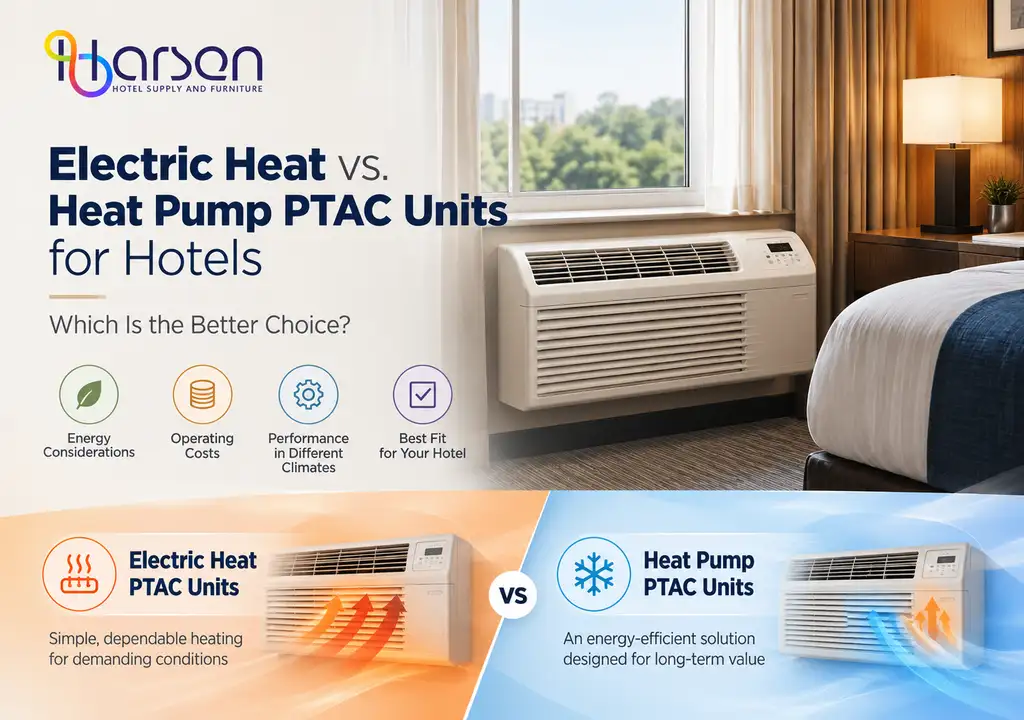
Choosing the right PTAC heating system is an important decision for hotel owners, operators, and property managers. Whether you are renovating guest rooms, replacing outdated HVAC equipment, or planning a new hotel project, selecting between electric heat and heat pump PTAC units can influence operating costs, guest comfort, and long-term maintenance requirements.
Both systems provide dependable heating and cooling, but they work differently and are suited to different operating conditions.
In this guide, Harsen Hotel Supply and Furniture explains the differences between electric heat and heat pump PTAC units, their advantages, key considerations, and how to select the right option for your hotel property.
What Is a PTAC Unit and Why Is It Used in Hotels?
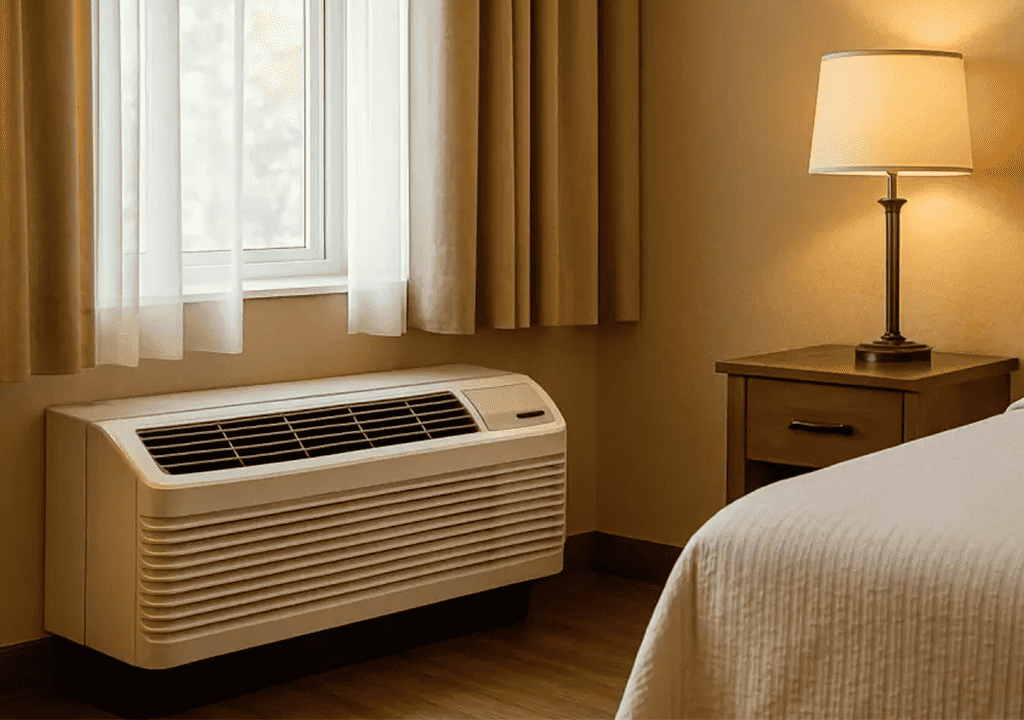
PTAC stands for Packaged Terminal Air Conditioner. It is a self-contained heating and cooling unit commonly installed through an exterior wall, usually beneath a guest room window.
PTAC systems are widely used in hotels, motels, extended-stay properties, and other hospitality facilities because each guest room can have its own temperature control.
Some of the key advantages include:
- Individual Room Control: Guests can adjust their room temperature independently.
- Convenient Replacement: Slide-out chassis designs make servicing and replacement easier on compatible installations.
- Flexible Heating Options: Available in electric resistance heat and heat pump configurations.
- Space Efficiency: The through-the-wall design keeps the equipment compact and avoids the need for extensive ductwork.
- Hospitality Applications: Suitable models are available for new hotel projects and renovation requirements.
When selecting a PTAC unit, one of the first decisions is choosing the appropriate heating technology.
Electric Heat PTAC Units: Simple and Dependable Heating
An electric heat PTAC uses an electrical resistance heating element to warm the air directly. Electricity passes through the heating element, which produces heat that is circulated into the guest room.
This is a straightforward heating method and is available in several commercial PTAC models.
When should hotels consider electric heat?
Electric heat PTAC units may be a suitable choice when:
- Your property experiences very cold winter conditions.
- Consistent heating performance is a priority.
- The initial equipment purchase budget is a major consideration.
- You are replacing existing electric heat PTAC units.
- Your property has suitable electrical infrastructure for the selected model.
Advantages of electric heat PTAC units
- Straightforward heating operation.
- Consistent resistance heating when the unit is operating within its specifications.
- Generally lower equipment purchase cost compared with comparable heat pump models.
- Suitable for properties where direct electric heating is preferred.
Things to consider
Electric resistance heating converts electrical energy directly into heat. It can therefore consume more electricity than a heat pump delivering the same amount of heating under suitable operating conditions.
For hotels operating multiple guest rooms throughout the heating season, electricity consumption should be considered when evaluating the long-term operating budget.
Heat Pump PTAC Units: An Energy-Efficient Heating Alternative
A heat pump PTAC works differently from an electric resistance heating system. Instead of generating heat directly, it transfers available heat from the outdoor air into the guest room through a refrigerant cycle.
Because it moves heat rather than generating all of it through electrical resistance, a heat pump can deliver more heating energy than the electrical energy it consumes under suitable operating conditions.
Many PTAC heat pump models also include electric resistance backup heating. This backup system can support heating when outdoor conditions fall below the heat pump's effective operating range.
When should hotels consider heat pump PTAC units?
Heat pump models may be worth considering when:
- Your hotel operates in a moderate or relatively mild winter climate.
- Heating is required for extended periods.
- Long-term energy consumption is an important purchasing consideration.
- You are upgrading HVAC equipment as part of a renovation project.
- Your property wants to evaluate more energy-efficient heating options.
Advantages of heat pump PTAC units
- Can provide more heating output per unit of electricity under suitable conditions.
- May reduce heating-related electricity consumption compared with resistance-only heating.
- Often include electric resistance backup heating.
- Provide both heating and cooling through one integrated unit.
- Can be a practical option for hotels planning long-term equipment upgrades.
Things to consider
Heat pump performance depends on outdoor temperature and the specifications of the selected model. Efficiency can decrease as outdoor temperatures fall, and backup electric heating may operate when additional heating is required.
Always review the manufacturer's operating-temperature range, heating capacity, electrical requirements, and backup heating specifications before purchasing.
Electric Heat vs. Heat Pump PTAC: Side-by-Side Comparison
Understanding the differences makes it easier to select equipment that suits your property's requirements.
Feature | Electric Heat PTAC | Heat Pump PTAC |
Heating Method | Electric resistance element | Refrigerant-based heat transfer |
Heating Efficiency | Direct electric heating | Generally higher efficiency under suitable conditions |
Initial Equipment Cost | Generally lower | Generally higher |
Electricity Consumption | Can be higher during extended heating | Can be lower when operating efficiently |
Cold Weather | Provides resistance heating | Performance depends on outdoor temperature |
Backup Heating | Not applicable as a separate backup in resistance-only models | Many models include electric resistance backup |
Best Consideration | Simplicity and dependable direct heating | Long-term energy efficiency |
Maintenance | Heating element and general unit maintenance | Heat pump components, refrigerant system and backup heating |
Important: Actual performance, efficiency, and operating costs vary by model and installation conditions. Compare manufacturer specifications rather than relying on heating type alone.
Which PTAC Brands and Options Are Available at Harsen?
Harsen Hotel Supply and Furniture offers a range of commercial PTAC products for hotel renovations, replacements, and new hospitality projects.
Our website features products from established brands, including Amana, GE Appliances, Hotpoint, and Distinctions.
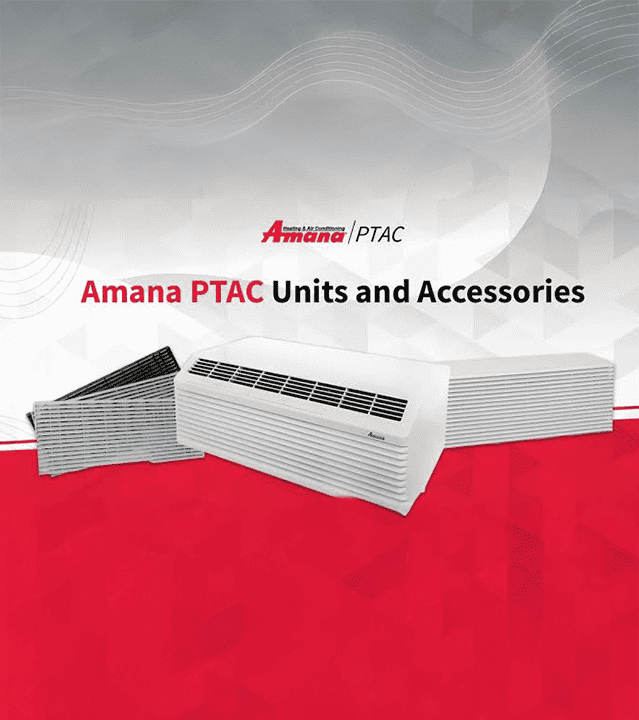
Amana PTAC Units
Amana offers electric heat and heat pump configurations across various capacities and voltage options. Selected models feature digital controls, washable filters, and compatibility with hotel control systems.
Explore: Amana PTAC Collection
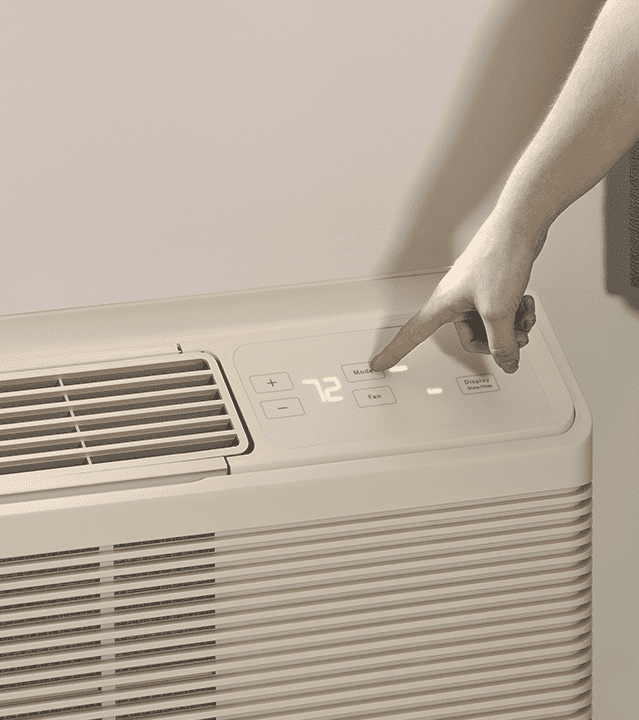
GE Zoneline PTAC Units
GE Zoneline offers heating and cooling solutions for hospitality applications, including heat pump and electric heat configurations. Selected models include additional features designed for specific installation and operating requirements.
Explore: GE PTAC Collection
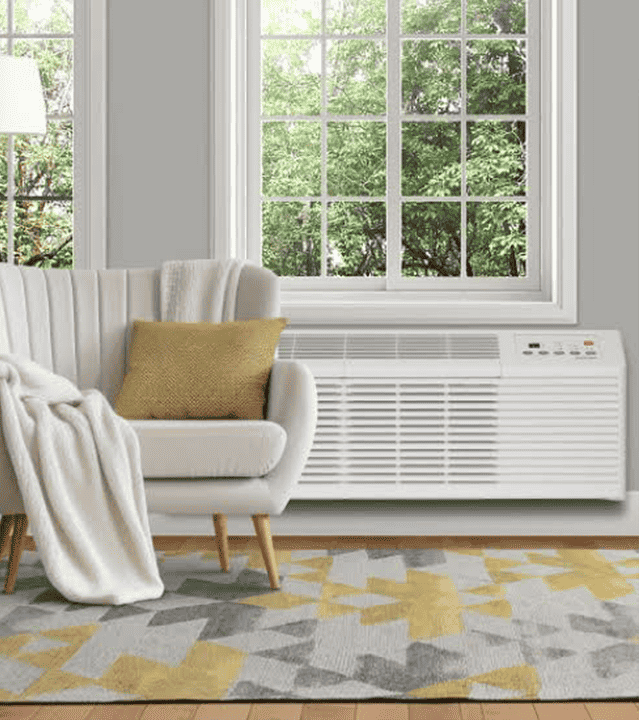
Hotpoint PTAC Units
Hotpoint offers electric heat and heat pump models, including selected units with electric backup heating, temperature-limiting options, freeze protection, and automatic power recovery.
Explore: Hotpoint PTAC Collection
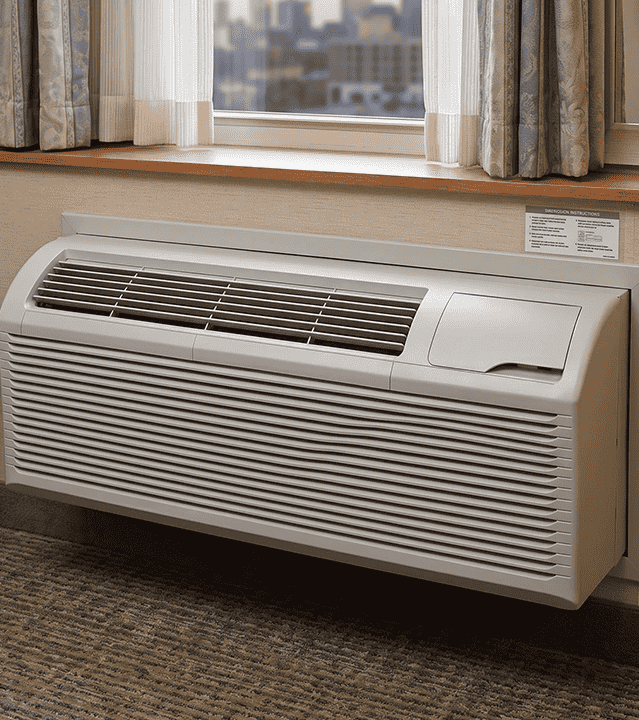
Distinctions PTAC Units
Distinctions offers electric heat and heat pump configurations with different capacities and electrical specifications. Selected models feature digital controls, thermostat compatibility, and electric backup heating.
Explore: Distinctions PTAC Collection
How to Choose the Right BTU Capacity for Your Hotel Room
Apart from selecting the heating type, choosing the correct BTU capacity is essential for comfortable room temperatures and appropriate equipment operation.
BTU, or British Thermal Unit, indicates the heating or cooling capacity of an HVAC unit.
The right capacity depends on several factors, including:
- Guest room floor area.
- Ceiling height.
- Window size and insulation.
- Room orientation and sun exposure.
- Number of occupants.
- Local climate and outdoor temperatures.
A larger room does not automatically require the highest-capacity unit. An appropriately sized PTAC should be selected based on the room's actual heating and cooling load.
For hotel projects involving multiple room types, consider evaluating each room category separately rather than selecting one capacity for the entire property.
Important Factors to Check Before Purchasing PTAC Units
Before placing a bulk order, hotel owners and purchasing teams should verify the following:
- Heating Type: Decide whether electric resistance heat or a heat pump configuration is more suitable for your climate and operating requirements.
- BTU Capacity: Match the unit capacity to the guest room's heating and cooling requirements.
- Voltage and Amperage: Confirm the electrical supply and circuit requirements before ordering.
- Wall Sleeve Compatibility: Check the existing wall sleeve dimensions, chassis size, and installation requirements, particularly when replacing older units.
- Thermostat and Controls: Verify compatibility with wall thermostats and hotel front desk or energy management control systems where required.
- Warranty and Availability: Review manufacturer warranty coverage, parts availability, and expected delivery schedules before finalizing your purchase.
These checks can help prevent compatibility issues, installation delays, and unnecessary replacement costs.
Planning a Hotel Renovation? Consider Your Complete FF&E Requirements
PTAC replacement is often part of a larger hotel renovation or Property Improvement Plan (PIP).
When upgrading guest rooms, it is worth reviewing other essential hospitality products at the same time. Coordinating procurement can simplify product selection, budgeting, and project planning.
Harsen Hotel Supply and Furniture offers a range of hospitality products and FF&E solutions, including:
- Hotel furniture and metal bed frames.
- LED bathroom mirrors.
- Hotel lighting solutions.
- PTAC heating and cooling units.
- Cultured marble shower bases and wall panels.
- Guest room supplies and hospitality essentials.
Planning these requirements together can help purchasing teams coordinate specifications, quantities, and delivery requirements across different product categories.
Final Thoughts: Which PTAC Heating System Is Right for Your Hotel?
There is no single heating solution that is ideal for every hotel property.
Electric heat PTAC units can be a practical option when straightforward resistance heating, lower initial equipment cost, or reliable heating in colder conditions is a priority.
Heat pump PTAC units may be a better long-term option for properties where operating efficiency is important and outdoor conditions support effective heat pump operation.
The right decision should consider climate, room requirements, electrical compatibility, equipment specifications, initial investment, and expected operating costs.
At Harsen Hotel Supply and Furniture, we help hospitality buyers explore PTAC options and hotel supply solutions for renovation, replacement, and new-build projects.
Looking for electric heat or heat pump PTAC units for your hotel?
Contact our team to discuss your project requirements, product specifications, and bulk purchasing needs.